
Every successful restaurant has something guests rarely notice: consistency.
Whether it’s the taste of a signature dish, the speed of service, or how staff greet customers, consistency doesn’t happen by accident. It comes from well-defined Standard Operating Procedures (SOPs).
Without SOPs, restaurants often depend on individual employees’ habits and experience. That creates inconsistency, makes training difficult, and increases the likelihood of mistakes.
In this guide, you’ll learn what restaurant SOPs are, why they matter, how to create them, and the essential procedures every restaurant should document.
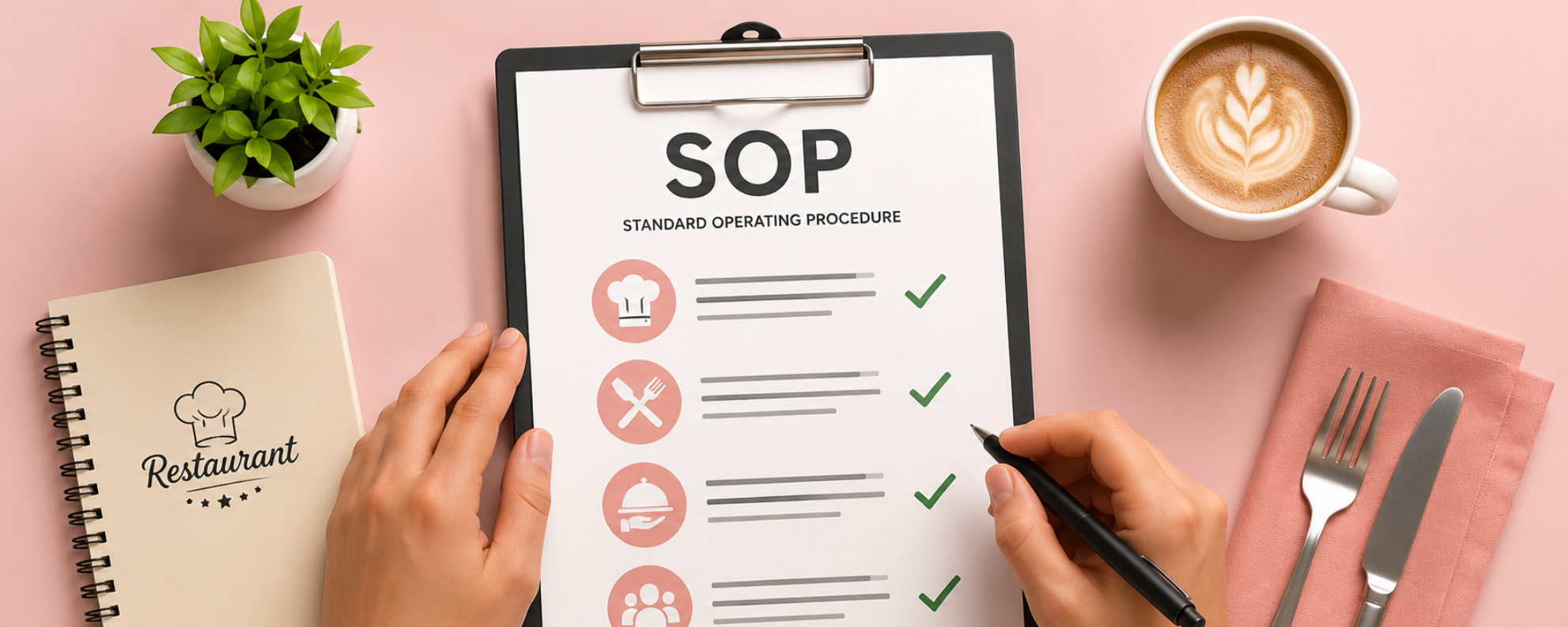
A Restaurant Standard Operating Procedure (SOP) is a documented set of step-by-step instructions that explains how a specific task should be performed.
Instead of relying on verbal instructions, SOPs provide clear guidance so every employee follows the same process.
Examples include:
Opening the restaurant
Closing procedures
Food preparation
Customer greeting
Cleaning schedules
Inventory checks
Cash handling
Online order management
Complaint resolution
Think of SOPs as the operating system of your restaurant.
Restaurants that operate without documented processes often experience:
Inconsistent food quality
Slow service
Training challenges
Higher employee turnover
Inventory waste
Customer complaints
Increased operating costs
Well-designed SOPs help restaurants:
Deliver consistent customer experiences
Reduce operational errors
Improve food safety
Train new employees faster
Increase accountability
Maintain quality across every shift
When every employee follows the same process, guests know what to expect every time they visit.
If any of these situations sound familiar, it’s time to review your operating procedures:
Staff perform the same task differently.
New employees require weeks of supervision.
Customers receive inconsistent service.
Inventory frequently goes missing.
Opening and closing take longer than expected.
Kitchen mistakes happen regularly.
Managers spend most of their day solving preventable problems.
These are usually process issues—not people issues.
Opening SOPs ensure every shift starts smoothly.
Typical checklist:
Unlock restaurant
Turn on equipment
Check refrigeration temperatures
Prepare workstations
Verify inventory
Inspect dining area
Test POS system
Confirm online ordering channels are active
Kitchen SOPs help maintain food quality and safety.
Include:
Ingredient preparation
Portion sizes
Cooking temperatures
Plating standards
Storage procedures
Cross-contamination prevention
Cleaning schedules
Consistency in the kitchen builds customer trust.
Customer service should never depend solely on personality.
Document procedures for:
Greeting guests
Seating process
Taking orders
Menu recommendations
Handling special requests
Serving food
Processing payments
Saying goodbye
Small details create memorable dining experiences.
Food safety protects both customers and your business.
Essential procedures include:
Hand washing standards
Temperature monitoring
Expiration date checks
Food labeling
Storage guidelines
Cleaning and sanitization
Pest prevention
Personal hygiene requirements
Inventory mistakes directly impact profit.
Document how employees should:
Receive deliveries
Inspect ingredients
Store products
Rotate stock using FIFO
Record waste
Count inventory
Report shortages
Regular inventory processes help reduce unnecessary food costs.
A clean restaurant improves customer confidence and supports food safety.
Create daily, weekly, and monthly cleaning schedules covering:
Kitchen equipment
Floors
Refrigerators
Dining area
Restrooms
Storage rooms
Waste disposal
Assign responsibility for each task.
Mistakes happen.
The difference is how your team responds.
An effective complaint SOP should include:
Listen without interruption.
Acknowledge the issue.
Apologize sincerely.
Resolve the problem quickly.
Thank the customer.
Report recurring issues to management.
Fast recovery often creates more loyal customers than a flawless visit.
With more customers ordering online, restaurants need clear digital workflows.
Your SOP should cover:
Order confirmation
Preparation priority
Packaging standards
Pickup verification
Delivery handoff
Order tracking
Customer communication
Restaurants using their own branded online ordering system can also define how orders are managed without relying entirely on third-party marketplaces. This helps maintain operational consistency while strengthening direct customer relationships.
A structured closing routine prepares the restaurant for the next day.
Checklist:
Clean kitchen
Sanitize equipment
Store ingredients
Count cash
Backup reports
Secure inventory
Lock entrances
Turn off equipment
Activate security systems
Never rely on memory.
Creating SOPs doesn’t have to be complicated.
Document every task employees perform regularly.
Examples:
Preparing burgers
Serving coffee
Cleaning tables
Receiving deliveries
Avoid vague language.
Instead of:
“Clean the kitchen.”
Write:
“Sanitize preparation tables using approved food-safe sanitizer after each shift.”
Specific instructions reduce confusion.
Visual references make SOPs easier to understand, especially during training.
Ask a new employee to follow the document without assistance.
If they struggle, improve the instructions.
Restaurants evolve.
Review SOPs whenever you:
Change equipment
Update the menu
Introduce new technology
Adjust workflows
Open another location
Avoid these common problems:
SOPs that are too long
Outdated instructions
No staff training
No accountability
Too much technical language
Documents nobody reads
Good SOPs are practical, simple, and easy to access.
Task: Closing Coffee Machine
Turn off machine.
Remove coffee grounds.
Flush hot water system.
Wash removable parts.
Sanitize steam wand.
Dry components.
Reassemble.
Record maintenance log.
A simple checklist like this reduces mistakes and extends equipment life.
Even the best SOPs lose value if employees don’t follow them consistently.
Digital tools can help restaurants:
Centralize operating procedures
Standardize online ordering workflows
Keep menus updated across channels
Track operational performance
Improve communication between teams
Reduce manual administrative work
As restaurants grow, having a single platform to manage digital operations can make it easier to maintain consistency across locations.
Before considering your SOP system complete, ensure you have documented:
Opening procedures
Closing procedures
Kitchen operations
Food safety
Customer service
Inventory management
Cleaning schedules
Equipment maintenance
Online order workflow
Complaint handling
Emergency procedures
Staff onboarding
A restaurant’s success depends on more than great recipes. Consistent execution is what turns first-time visitors into loyal customers.
Standard Operating Procedures create that consistency by giving every employee a clear, repeatable way to perform daily tasks. Whether you’re running a neighborhood café or managing multiple locations, investing time in documented SOPs can improve efficiency, reduce errors, and strengthen the guest experience.
As your operations become more digital, it’s also worth reviewing how your technology supports these processes. For example, if you use online ordering, QR menus, or a branded restaurant website, ensure those workflows are included in your SOPs so both staff and customers enjoy a seamless experience.
To build a stronger restaurant business, explore these related guides:
Restaurant Website Checklist
QR Menu Best Practices
Restaurant Marketing Ideas That Actually Work
Restaurant Analytics: Metrics Every Owner Should Track

Join 200+ restaurant owners who are growing their business with LaunchResto.